
Last update
Lëtz prepare! Luc Frieden, Yuriko Backes and Léon Gloden present the results of the national survey on risk and threat perception
Prime Minister Luc Frieden, Minister of Defence Yuriko Backes and Minister for Home Affairs Léon Gloden today presented the findings of Luxembourg's national survey on risk and threat perception. Conducted as part of the implementation of the National Resilience Strategy (NRS), the survey represents an important milestone in strengthening the country's preparedness for future crises.
À la Une
-

(de g. à dr.) Léon Gloden, ministre des Affaires intérieures ; Luc Frieden, Premier ministre ; Yuriko Backes, ministre de la Défense ; Guy Bley, haut-commissaire à la Protection nationale
© SIP / Emmanuel Claude
-

(de g. à dr.) Yuriko Backes, ministre de la Défense ; Luc Frieden, Premier ministre ; Léon Gloden, ministre des Affaires intérieures
© SIP / Emmanuel Claude
-

Conférence de presse : Présentation des résultats de l’enquête nationale sur la perception des risques et menaces, le 1er juillet 2026
© SIP / Emmanuel Claude
-

Luc Frieden, Premier ministre
© SIP / Emmanuel Claude
-
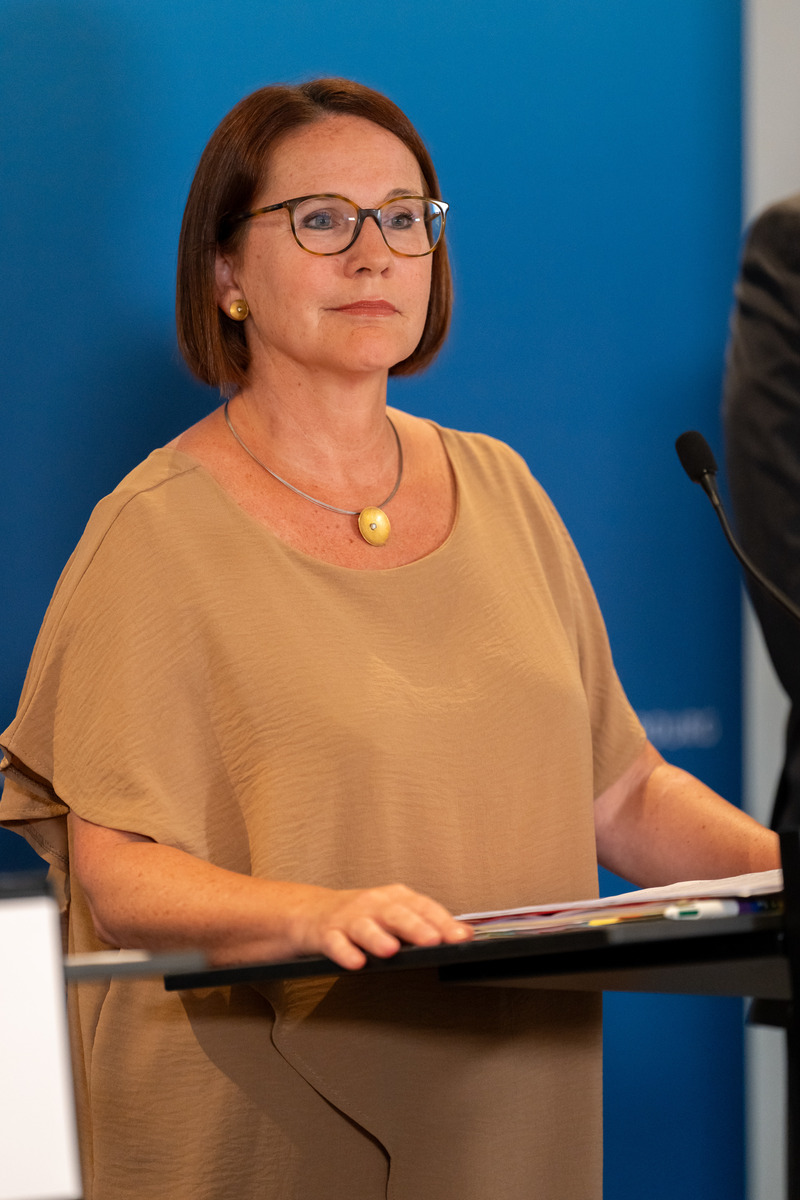
Yuriko Backes, ministre de la Défense
© SIP / Emmanuel Claude
-

Guy Bley, haut-commissaire à la Protection nationale
© SIP / Emmanuel Claude
-

Léon Gloden, ministre des Affaires intérieures
© SIP / Emmanuel Claude
-

(de g. à dr.) Yuriko Backes, ministre de la Défense ; Guy Bley, haut-commissaire à la Protection nationale
© SIP / Emmanuel Claude
-

(de g. à dr.) Yuriko Backes, ministre de la Défense ; Guy Bley, haut-commissaire à la Protection nationale
© SIP / Emmanuel Claude
-

Conférence de presse : Présentation des résultats de l’enquête nationale sur la perception des risques et menaces, le 1er juillet 2026
© SIP / Emmanuel Claude
At a time when Luxembourg has been experiencing an exceptional heatwave that recently triggered a red alert and required the extensive mobilisation of public authorities and emergency services, crisis preparedness has become more relevant than ever. The situation serves as a tangible reminder that risks — whether climate-related, health-related, technological or security-related — can materialise rapidly and affect society as a whole.
It also underscores that resilience relies not only on coordinated government action, but also on the ability of citizens to stay informed and respond appropriately.
Against this backdrop, the survey provides valuable insights into how residents perceive risks and threats and assesses their level of preparedness for situations such as those experienced by the country in recent days.
Conducted among a representative sample of 1,500 residents, the survey sought to better understand public perceptions of risk, levels of awareness and individual preparedness.
A population that is risk-aware, yet not fully prepared
The findings reveal that Luxembourg's population is generally well informed and aware of the main risks facing society, particularly cyber threats and economic risks. Nevertheless, a significant gap remains between awareness and preparedness.
While 85% of respondents regularly seek information on potential risks, nearly one in two admit they do not know exactly how they should react in the event of a crisis.
The survey further highlights that:
- The most tangible and visible risks are perceived as the most likely to occur.
- Major but less tangible threats, such as nuclear incidents or military conflicts, are generally seen as more remote, although their potential consequences are considered severe or even catastrophic.
- Basic preparedness measures are relatively widespread (71% of respondents have smoke detectors, and many maintain emergency supplies), but remain insufficient to cope with major crises.
Strong civic engagement potential and high levels of trust
The findings also point to considerable willingness among citizens to contribute to collective resilience. A large majority (86%) say they would be prepared to assist their neighbours during a crisis, while 60% would consider volunteering as part of a civilian, health or military reserve structure.
Public trust in institutions remains strong overall, particularly regarding the continuity of essential services (83%). At the same time, citizens expect communication to be clearer, faster and more action-oriented.
Clearly identified priorities for action
In response to the survey findings, the Government intends to reinforce its efforts in a number of priority areas:
- Improving access to clear, practical and multilingual information;
- Developing practical preparedness tools, including guides, emergency kits and training initiatives;
- Increasing awareness of existing systems and services such as LU-Alert and official information platforms;
- Focusing particularly on young people and vulnerable groups, who tend to be less prepared;
- Strengthening civic engagement and local solidarity.
This approach forms part of a whole-of-society strategy involving public institutions, citizens, municipalities and economic stakeholders alike.
A coordinated government response
During the press conference, government representatives highlighted the implications of the findings within their respective areas of responsibility.
The Prime Minister stressed the importance of strengthening Luxembourg's resilience to all types of crises, ensuring the continuity and coordination of essential services and maintaining a high level of public trust in government action.
The Minister for Home Affairs emphasised that resilience is a shared responsibility involving the State, municipalities and citizens. He highlighted the publication of a 13-step guide designed to support municipalities in developing Local Resilience Plans (LRPs), recognising that local authorities are best placed to understand the realities and needs of their communities. He also underlined the role of the CGDIS as Luxembourg's civil protection backbone, the continued development of the national public warning and information system LU-Alert, and the creation of RESC-LU within the CGDIS as a national reserve of specialised capabilities that can support local and national authorities in the event of a disaster. His message was clear: let us prevent disasters from escalating into crises.
The Minister of Defence addressed the evolving security and military threats facing Europe and the wider international community and stressed the importance of close civil-military cooperation and coordination.
Building a culture of resilience
The authorities reiterate that resilience is a shared responsibility that concerns society as a whole. It depends not only on public authorities, but also on the ability of every citizen to stay informed, be prepared and respond appropriately during emergencies.
As Prime Minister Luc Frieden stated:
"Being informed is not enough — people must also know how to act. Resilience is something we build together. It depends on each and every one of us."
The next phase will include public awareness campaigns, the distribution of practical preparedness tools — including the Lëtz prepare! guide — and further initiatives aimed at encouraging citizen participation.
The Lëtz prepare! guide supports residents in preparing for emergencies by providing practical advice on building emergency reserves and assembling a 72-hour self-sufficiency kit. It also explains how LU-Alert, Luxembourg's national public warning and information system, operates and outlines the key actions to take during an emergency.
A foundation for future action
The survey provides an essential evidence base for shaping public policies on crisis prevention and management. It will help tailor awareness-raising efforts and enhance Luxembourg society's ability to meet future challenges.
The authorities reaffirm their commitment to pursuing this long-term effort and to strengthening the country's collective resilience to risks and threats in a spirit of shared responsibility.
Press release issued by the Ministry of State, the Ministry of Home Affairs, the Directorate of Defence, and the High Commission for National Protection